
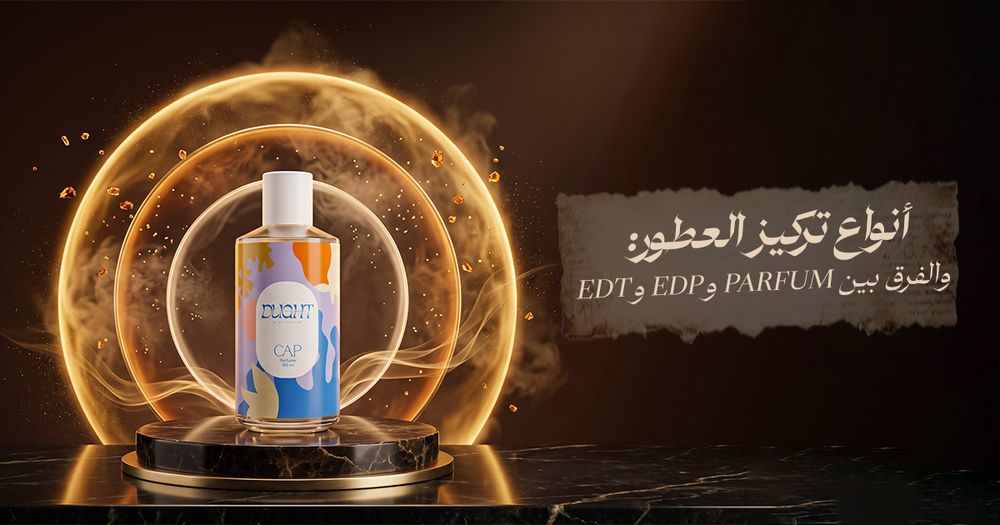
Types of Perfume Concentration: The Difference Between Parfum, EDP and EDT
Have you ever bought the same perfume twice, only to find that the scent was different each time?
You may notice that a perfume has the same n
You may notice that a perfume has the same name, but one bottle is labeled Eau de Parfum (EDP), another Eau de Toilette (EDT), or Parfum. Many buyers assume that the only difference is longevity, but the differences can also extend to how the fragrance develops on the skin, its projection, intensity, longevity, and sometimes even the formulation itself.
Understanding the different types of perfume concentration can help you choose the version that best suits your lifestyle and preferences. It also makes it easier to understand the difference between Eau de Parfum and Eau de Toilette, as well as the difference between Parfum and Eau de Parfum, in a practical way and away from common misconceptions.
What Are the Different Types of Perfume Concentration?
Perfume concentration refers to the proportion of fragrance oils blended with alcohol and other solvents in a fragrance formula. This concentration does not only affect how long the perfume lasts, but can also influence its intensity after spraying, how the scent develops over time, and the overall sensation it creates on the skin.
The International Fragrance Association (IFRA) explains that terms such as Parfum, Eau de Parfum, and Eau de Toilette are not standardized legal categories. Instead, they are commonly used classifications within the fragrance industry.
As a result, fragrance oil concentrations can vary from one brand to another. This means that two perfumes with the same concentration label may still differ in performance, longevity, and how their scent develops on the skin.
How Are Perfume Concentrations Classified?
In general, the different types of perfume concentration can be divided into four main categories:
Concentration | Approximate Fragrance Oil Concentration | Average Longevity | Most Common Use |
|---|---|---|---|
Parfum | 20–40% | 8–12 hours or more | Special occasions and evenings |
Eau de Parfum (EDP) | 15–20% | 6–8 hours | Daily use and evenings |
Eau de Toilette (EDT) | 5–15% | 3–5 hours | Daytime and warm weather |
Eau de Cologne (EDC) | 2–5% | Around 2 hours | Quick refreshment |
Important: These percentages are approximate and are not fixed rules. They may vary depending on the manufacturer and the type of fragrance. Therefore, do not rely on concentration alone when comparing different versions.
Does the Perfume Formula Change When the Concentration Changes?
In many cases, fragrance houses rebalance the formula when releasing the same perfume in different concentrations. Some notes may become more prominent in an EDP version, while fresher notes may stand out more in an EDT version.
This is why some people may prefer one version over another even though both carry the same fragrance name.
Does a Higher Concentration Always Mean Better Longevity?
Not necessarily.
Although a higher concentration of fragrance oils may help extend the longevity of a perfume, performance is also affected by several other factors, including:
- The type of raw materials used.
- The nature of the fragrance notes.
- Your skin chemistry.
- Temperature and humidity.
- How the perfume is stored.
This is why, in some cases, an Eau de Toilette may last longer than an Eau de Parfum if its formula relies on ingredients that are naturally more long-lasting.
The Difference Between Eau de Parfum and Eau de Toilette
When comparing the difference between Eau de Parfum and Eau de Toilette, the distinction is not limited to concentration and longevity. It can also include the development of fragrance notes, projection, intensity, and the most suitable occasions for each version.
The following comparison highlights the main differences:
Comparison | Eau de Parfum (EDP) | Eau de Toilette (EDT) |
|---|---|---|
Fragrance Oil Concentration | Generally higher | Generally lower |
Longevity | Longer in most cases | Relatively shorter |
Projection | May be stronger initially or sit closer to the skin depending on the formula | Often fresher and lighter |
Note Development | Middle and base notes may be more noticeable | Top notes may remain prominent for longer |
Best Use | Evenings, special occasions, and cooler weather | Daytime, work, and hot weather |
It is also important to understand that the difference between Eau de Parfum and Eau de Toilette is not based on concentration alone. Some fragrance houses modify the balance of notes when producing a new version. Therefore, the personality of the fragrance may differ between the two versions even when they have similar names.
Do EDP and EDT Smell Different in the Same Perfume?
In some releases, Eau de Toilette creates a fresher impression because citrus, herbal, or other fresh notes may be more noticeable. Eau de Parfum, on the other hand, may emphasize warmer, woody, or oriental notes, making the fragrance feel deeper as it develops over time.
For this reason, you cannot assume that one version is always better than the other. The right choice depends on your personal preferences, when you plan to wear the fragrance, and the effect you want to achieve.
You can also compare the Eau de Parfum and Eau de Toilette options available from DL Perfume to see how differences in concentration can affect the fragrance notes and the description of each version.
When Should You Choose Eau de Parfum or Eau de Toilette?
This quick guide can help you make the right choice:
Choose Eau de Parfum If You:
- Want longer-lasting performance.
- Wear perfume for special occasions or evenings.
- Prefer deep and layered fragrances.
- Want to reduce the need to reapply your perfume throughout the day.
Choose Eau de Toilette If You:
- Prefer fresh and lightweight fragrances.
- Wear perfume at work or university.
- Live in an area with hot weather most of the year.
- Like to reapply your fragrance during the day when needed.
The Difference Between Parfum and Eau de Parfum
The difference between Parfum and Eau de Parfum is one of the topics that often confuses fragrance buyers. Some people believe that Parfum is simply Eau de Parfum with a higher concentration, but the reality can be more complex.
Parfum generally contains a higher concentration of fragrance oils, which can give it longer longevity in many cases. However, this does not mean that all types of perfume concentration use the exact same formula with simply more fragrance oils added.
Some fragrance brands completely reformulate the perfume when creating a Parfum version. They may adjust the proportions of fragrance notes or add new ingredients that give the Parfum a different personality from the Eau de Parfum rather than simply making it stronger.
Common Mistakes When Choosing a Perfume Concentration
Many buyers make mistakes that can lead them to choose a concentration that does not suit their needs. Some of the most common mistakes include:
Assuming That a Higher Concentration Is Always Better
- A higher concentration may increase longevity, but it does not necessarily mean that the fragrance will smell better or suit you more.
Buying the Same Concentration for Every Occasion
- Eau de Toilette may be ideal for work, while Parfum may be a better choice for an evening occasion. There is no single concentration that is perfect for every situation.
Ignoring How the Perfume Smells on Your Skin
- Perfume performance can vary from person to person. Therefore, it is always recommended to test a fragrance on your skin before purchasing a full-size bottle, especially when choosing between different concentrations.
Relying on the Name Without Checking the Version
- The same fragrance may be available in several concentrations, and each version can have a slightly different personality in terms of scent development and longevity.
Explore Different Perfume Concentrations at DL Perfume
If you want to compare different types of perfume concentration in practice, you can explore the DL Perfume collection, which includes Parfum, Eau de Parfum, and Eau de Toilette versions from popular international fragrance brands.
You can also explore the fragrances available at DL Perfume and check details such as fragrance notes, longevity, and projection to help you choose the concentration and version that best suits your preferences before making a purchase.
Frequently Asked Questions About Parfum, EDP and EDT
Do the Fragrance Notes Differ Between Eau de Parfum and Eau de Toilette?
They can differ in some fragrances. Some fragrance houses rebalance the notes when producing different concentrations of the same perfume. As a result, the two versions may smell slightly different even though they have a similar name.
Why Is Parfum More Expensive Than Eau de Parfum Even When They Have the Same Bottle Size?
Price is not determined by concentration alone. It can also be affected by the manufacturing process, the cost of raw materials, the way the fragrance formula is developed, and the brand's pricing strategy.
Can the Same Perfume Be Available in More Than One Concentration?
Yes. Many fragrance houses release the same perfume in several concentrations, such as Parfum, Eau de Parfum, and Eau de Toilette, allowing customers to choose the version that best matches their preferences and how they plan to use the fragrance.